Landscape & History - Utrecht (Week 7)
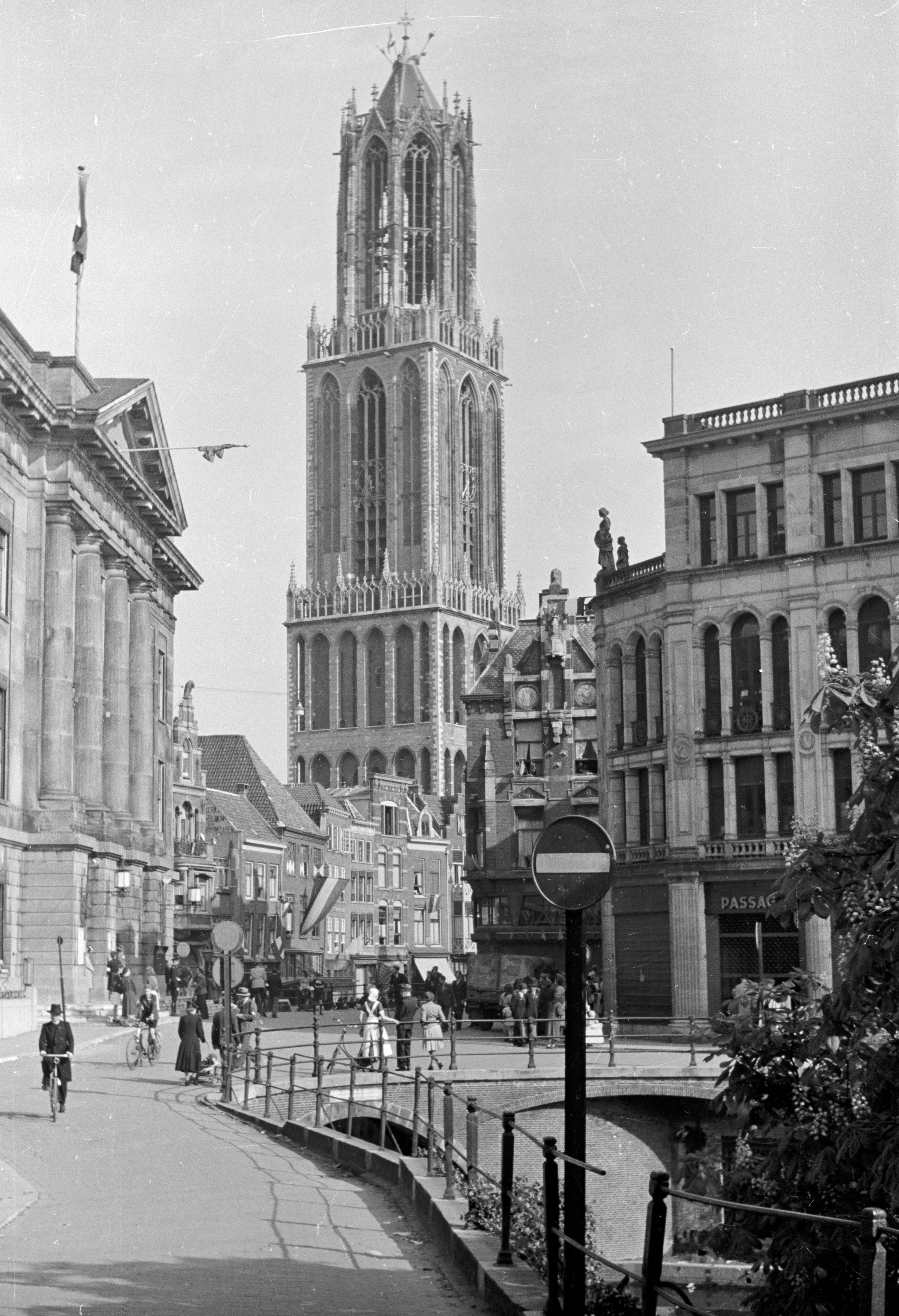
The landscape is so flat that when the wind blows in from the farms, the city smells of manure and soil and damp. Moisture hangs in the air like sheer curtains over tall canal-facing windows, filtering the light and inviting clean laundry to linger on drying racks for extra days. Sometimes, suddenly, it is pouring - the sky purging and heaving until the bricks glisten and the foam of bike seats are soaked through. The cats run for cover. Their owners know to open their doors for returning footmen or else they find shelter under restaurant awnings or cars parked along the street. Bikers persist. Raincoats materialize out of thin air and, then, unzipped when the shower stops. The day is once again returned to us and the canal glows green and reflective again.
Somewhere on a quiet street of the city, a writer’s keyboard sticks on the letter G. The little Dutch she knows allows for her brain to repeat: Niet goed, niet goed. But without the G: Niet oed, niet oed. She can’t seem to get the G right, anyway - the rhythm and balance of throat and tongue that will roll it into the correct pronunciation. She will just have to type without G’s. A story can be written any which way you will it to - bend it, curve it, fluster it, soothe it, focus it, throw it.
It is recorded that Utrecht was next. After Rotterdam was bombed on May 14th, they threatened the same for Utrecht. The next day, the Dutch forces declared their surrender. It is easy to envision the city of Utrecht in 1940 because so much of it survived - the Dom tower, the Old Canal, the skinny homes with top floors that flatten to a decorative facade. The city outline on a map looked much the same. Now, the sound of history can be heard in the wobble of bricks under bicycle tires, stealthily replaced in rote fashion each time they have needed to be, because the records are kept pristinely, each item and person and street noted and taken care of.
The Netherlands were liberated by Allied forces five years later. Today, the public holiday of Liberation Day is commemorated on the date of May 5th, which follows Remembrance of the Dead day on May 4th. Between 1940 and 1945, approximately 75% of Dutch Jews were killed in concentration camps, in their homes, in concealment, in trains, in fields, in streets, in front of their family members. One article online states the well-kept population records played a role in the immense number of lost lives. Another proposes the flat landscape allowed for little cover and concealment. It is easy to believe in that once you experience the vistas, the flat flat flat roads amidst plots of farmland, spotted neatly with black and white cows, the line of horizon where sky meets earth. It seems almost unstoppable.
The writer imagines the discouragement brought from running away for hours and looking back and seeing the very spot you started from. She imagines the smoke and flames seen from the distance, the images carried for miles and miles once the rain clears. She imagines the times you wish you could look out and not see where the sky meets the earth, you wish that there were things in between - hills, valleys, craters, moons, entire worlds that are nothing like this one. She imagines it had an impact, just as corner bricks ricochet into lampposts onto city squares. But that’s it. She can only imagine and it doesn’t even come close, how could it?
The theories on the population register and the disclosing landscape are besides the point and actually quite disturbing. The system caused mass destruction and murder because it was meant to. It had roots in threats, violence, submission, coercion. Its effect spread differently in different countries, cities, towns, communities - just as its antidote learned to. Newspapers, radio, letters, force, protest, sanctity, safety, trust, caution, bravery, annexes, crawlspaces, forests, fields, dinner tables, salons, pubs, markets, playgrounds, schools, spring, summer, fall, winter, spring, summer, fall, winter, spring, summer, fall, winter, spring, summer, fall, winter, spring.
The flatness existed in times of peace too.
The landscape adds texture to a history, but it’s not the source of it. Even the rain that springs from some endless fountain above is not the source - the atmosphere having to maintain certain conditions. Landscape outlives us - the precious medium we squirm throughout. We are lucky to have so much of it, to be given second chances to live rightly upon it.
Some references, provided by the Anne Frank House:
The Netherlands: the highest number of Jewish victims in Western Europe