Hunger & Ownership - Utrecht (Week 8)
A few years ago I wrote a piece titled “What Started with the Death of Michael Cera” for a creative nonfiction class with writer Annie Liontas. It was about a dear mouse who I named Michael Cera and who was the start of our mouse problem in our South Philly apartment. In the story, we adopt my now-cat Bean Dip as a way to fix this problem. The story was about how she came to us un-spayed and ferociously in-heat and kept us up all night crying. She did not hunt the mice. But the piece was really about hunger, how it manifests in many ways. “How and what we choose to succumb to is inconsistent, subjective, and sometimes surprising.”
When a mouse comes into your house, you can’t help but think of it as a personal experience. We, as humans hungry for drama, find it interesting to be afflicted. “The bastard was on our countertop.” “It ate a hole in the quinoa.” “I’ll be finding those tiny quinoa beads in the corners of my kitchen for years to come.” These are some of things you might say when it happens. But a mouse in the house is not a personal experience at all. It happens in most urban homes. Our mistake is in believing that the places we occupy only belong to us.
So we have our first Dutch mouse. If I were in the mood for further drama, I might name it after a fellow/former comedian Jonah Hill - before he lost a lot of weight, when he was in Superbad. Superbad Jonah Hill. But to avoid celebrity oustings: McLovin. Like his human counterparts, this guy has some height to him. He’s bigger than my previous American mice. But his confidence is familiar. He goes on the counter. He runs past us when he knows we’re taking a load off. He doesn’t make eye contact and this keeps him quick. He scurries up and over and across and literally uses (under) our front door as his exit. The hallway to our front door spans 16 feet (or 5 meters) from our kitchen. McLovin marathon training. McLovin bread winning. McLovin family man. This is how I’d like to think of him when I’m begrudgingly wiping down the surfaces each morning.
“I don’t believe that there is much to be done about hunger. You could starve, or fend it off, or you could try to satisfy it.”
This is what I wrote in my nonfiction piece. I take it to mean that each living thing has a life of its own, with its own needs and rules and justifications. Sometimes, these things change. A threat enters, a period of grief or elation takes place, you become disillusioned. The mouse will continue its search for food. Until you get a live trap, put it in your bike basket and release it in a nice grassy park. (His family will meet him there.) Or until your American cat with her stage presence personality gets the right documents and moves in. She will hunt the new Dutch birds from the other side of the window. She’ll cry for food and attention, as she’s now spayed. Her hair and scent - all over - will keep McLovin at bay. Daily life will proceed. And I’ll continue to seek familiarity in a place that cannot always provide each facet of it. Because this city is a living thing too. And I can’t expect it to be anything but what it is.
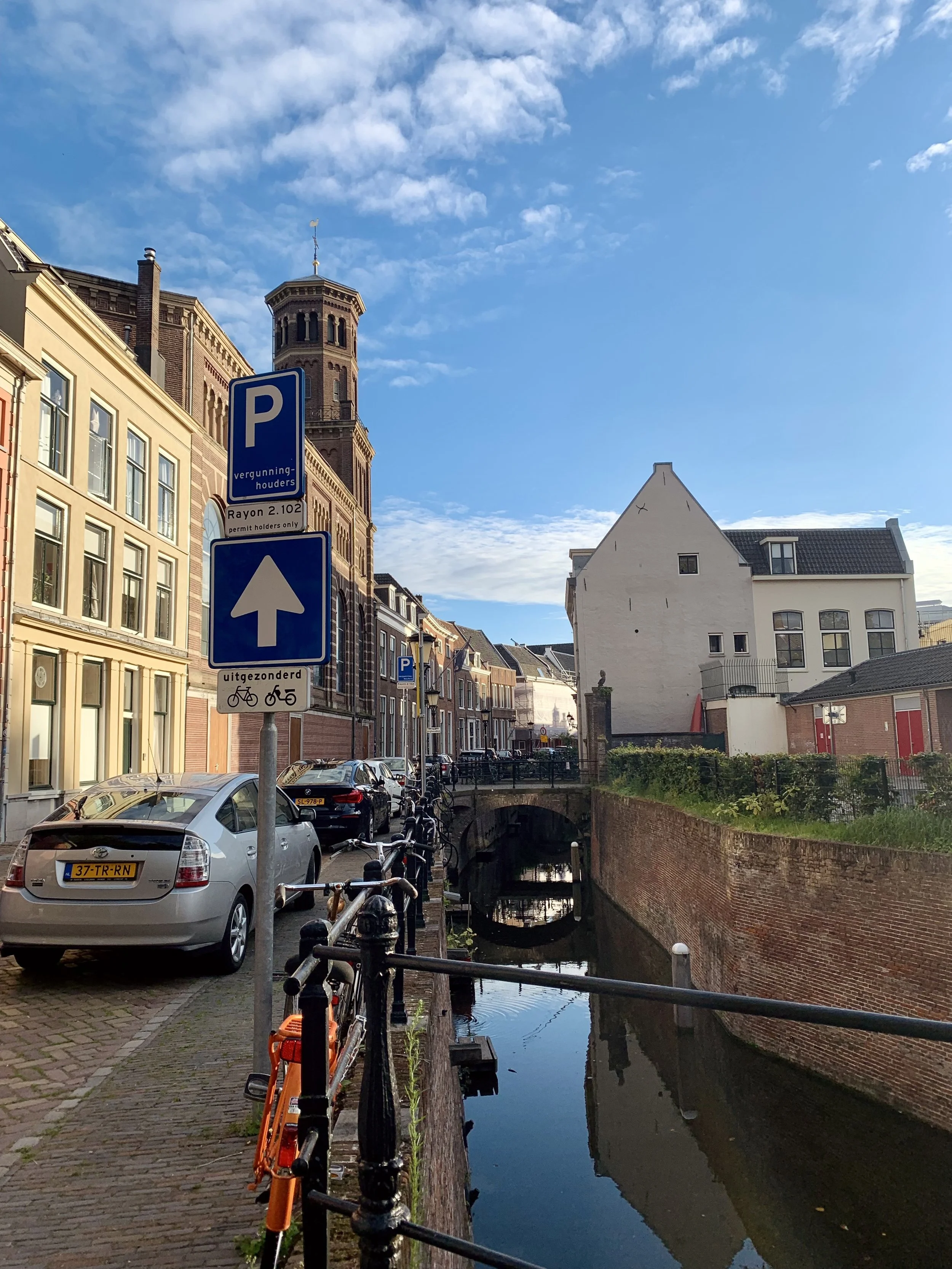
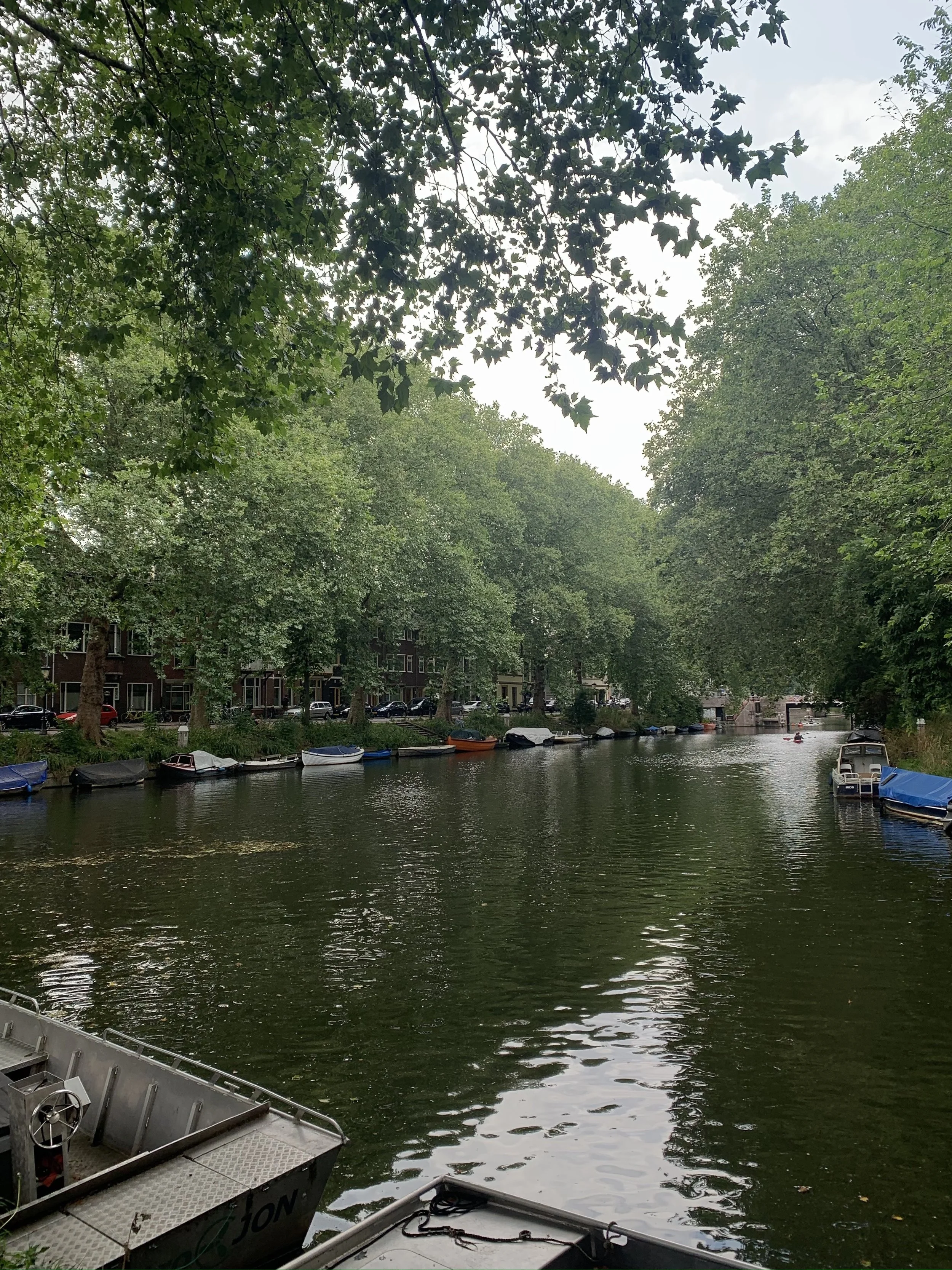
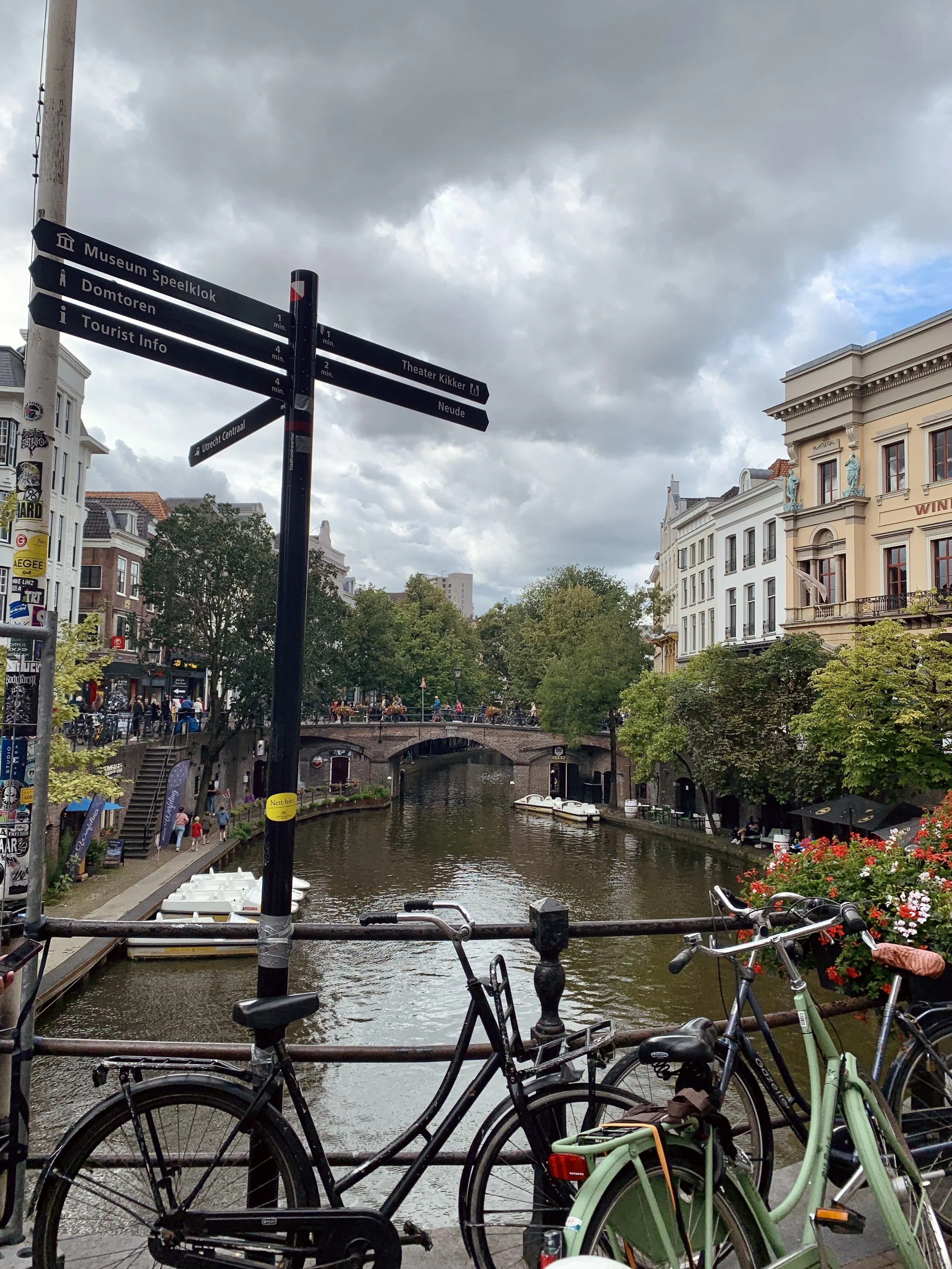
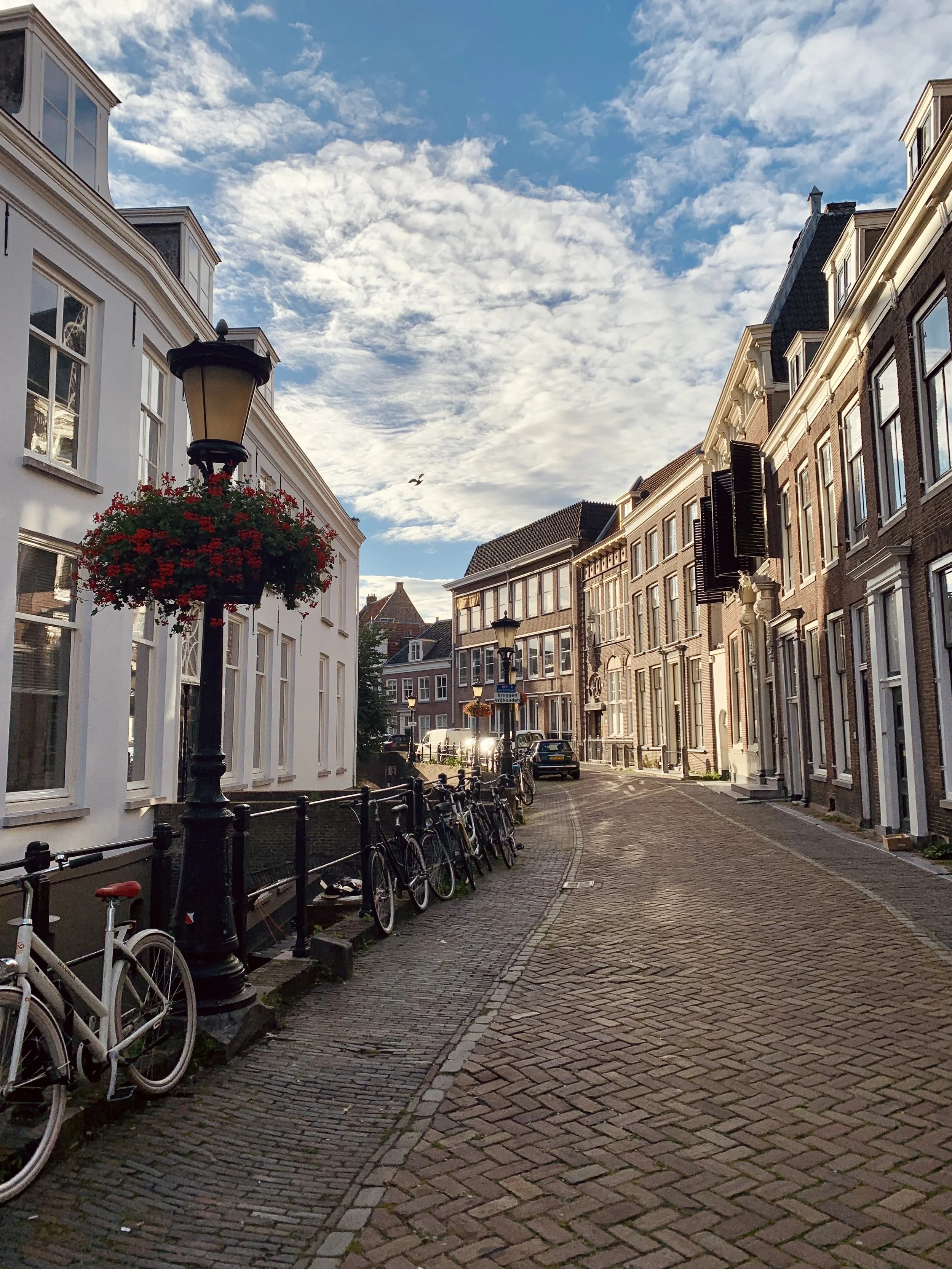
The church bells that ring in deep, ancient cadence at 9:45. The couples that bike while holding hands. The elderly man who went back to the table for his wife’s hat. (I watch as he passes it to her in a motion so succinct I know it is routine.) The pair of boys we passed fishing in Beatrixpark. The moving sound of a techno boat party on the canal. The carafes of tap water at restaurants that end up on the bill. The long, relaxed pace of eating out. Rickety bikes. The rubbery squeal of the coot water bird. The sudden rain. The sudden sunshine. Nothing overly decadent.
Sometimes we keep looking for things our body most remembers. This is survival instinct. But it’s not the only way to survive.
When Kees and I go to new places, he knows I need to “nest.” It’s just a part of my process of being away from home. It is unpacking a short pile of books and placing them on the bedstand. At my friends’ homes, I choose a corner for my belongings - my shoes, my Nalgene, my car keys. Nothing is scattered. A lot of times I move furniture or items so it better suits our needs and routines. When we stayed in our host’s guesthouse in Oklahoma City, I took photos of everything before before I moved them, then referred to the photos to move everything back before we left. Really, this is just way of taking control of my surroundings. The action of it makes me feel better. I am defensive of my system. Kees can tell you. Why I moved the suitcases to this corner, how the useless accent chair ended up in that one.
The mouse reminds me of this. I’m not offended by his lifestyle, but I am defensive of my home. It is a good feeling. This intruder, who is really only a balancing act of the nature of the world, has allowed me to take ownership, to claim something as mine. I will always long for things I don’t have. This is that hunger. It doesn’t leave us because it’s a part of us. But we make do. We build things. We start blogs.
McLovin as metaphor. McLovin as Existentialist. McLovin as therapist. McLovin as frenemy.