Aging & Confidence - Amsterdam (Month 3)
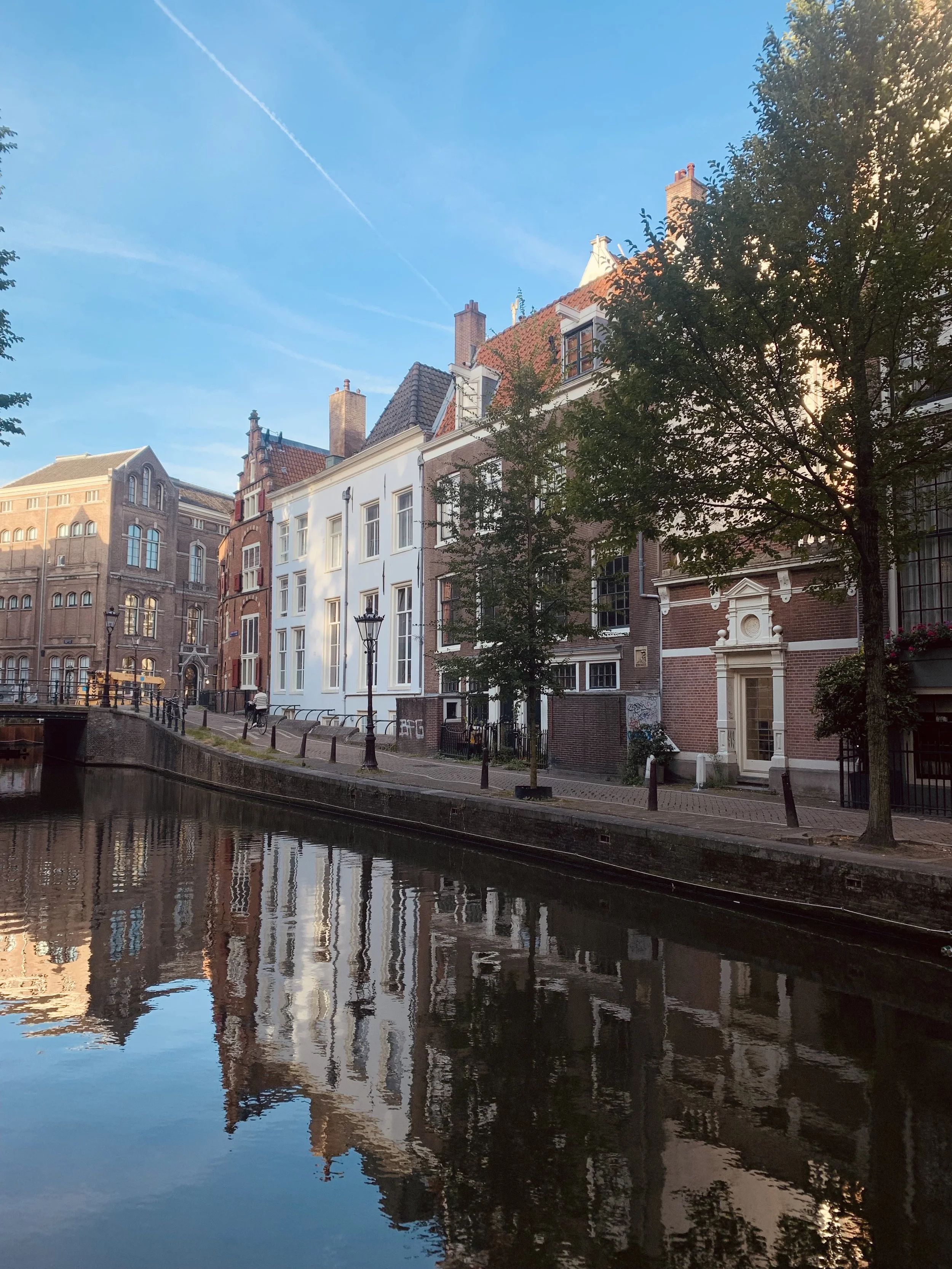
I started my first week of graduate school with a phone call with my best friend from Philly who is completing her Master’s in Counseling. She told me about how they are discussing the different stages in a lifespan in one of her new classes this semester - how we tend to develop a sense of curiosity, identity, routine, relationship, balance, etc. at different ages of our life. Of course there are many individual and external factors that affect these, but for the most part it can be argued that we follow a similar pattern with similar identifying conditions. For examples, (and don’t quote me on this,) adolescence is when you create a strong sense of self or identity and the middle-ages/adulthood is after you’ve established what you need and who you want to be and work to maintain this balance. I suppose by these parameters we, still considered “young adults,” are establishing these things in order to set up our full-on adult lives as well as a family life. It can feel daunting, pressurized.
But another way to look at it would be to accept the results of the taking stock of your life - what propels or drains your energy, what you need, what kind of person you want to be. That it is okay that daytime crowds in Amsterdam overwhelm me, that I have no desire to go to a European dance club or sleep in hostels even if it’s the cheapest way to travel and meet many new bizarre characters in strangers. That it is also okay that I need plenty of at-home time to reset, that I cherish communities that offer diversity in culture, ethnicity, experience, that I continue to wear shoes that look cool but aren’t comfortable to walk in. That it is okay that I have high standards for some things and not for others. Amidst my defining my needs, I begrudgingly acknowledge that challenge and change is important too. Challenging oneself creates moments of self-evaluation. Flexibility is always a practice.
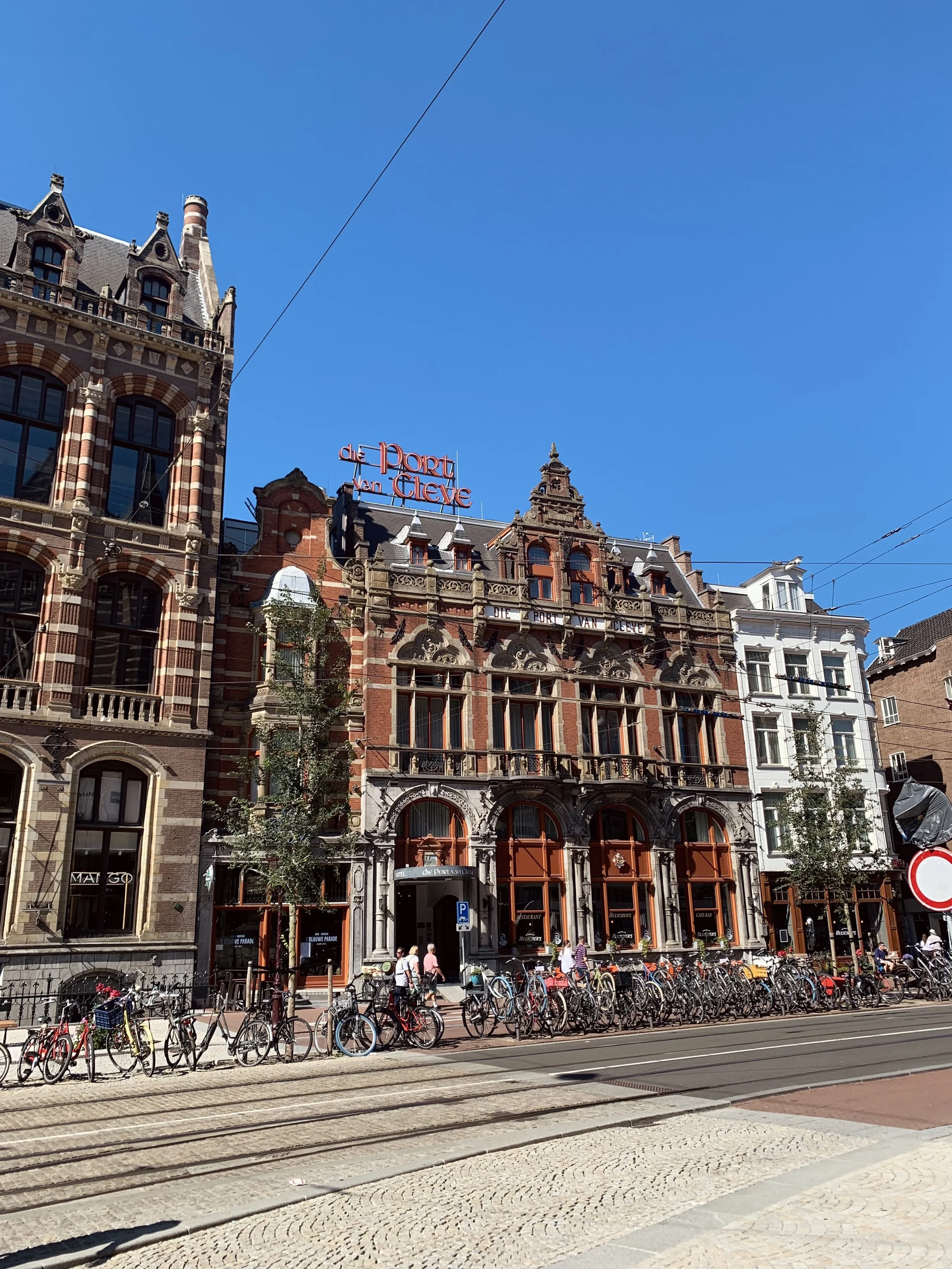
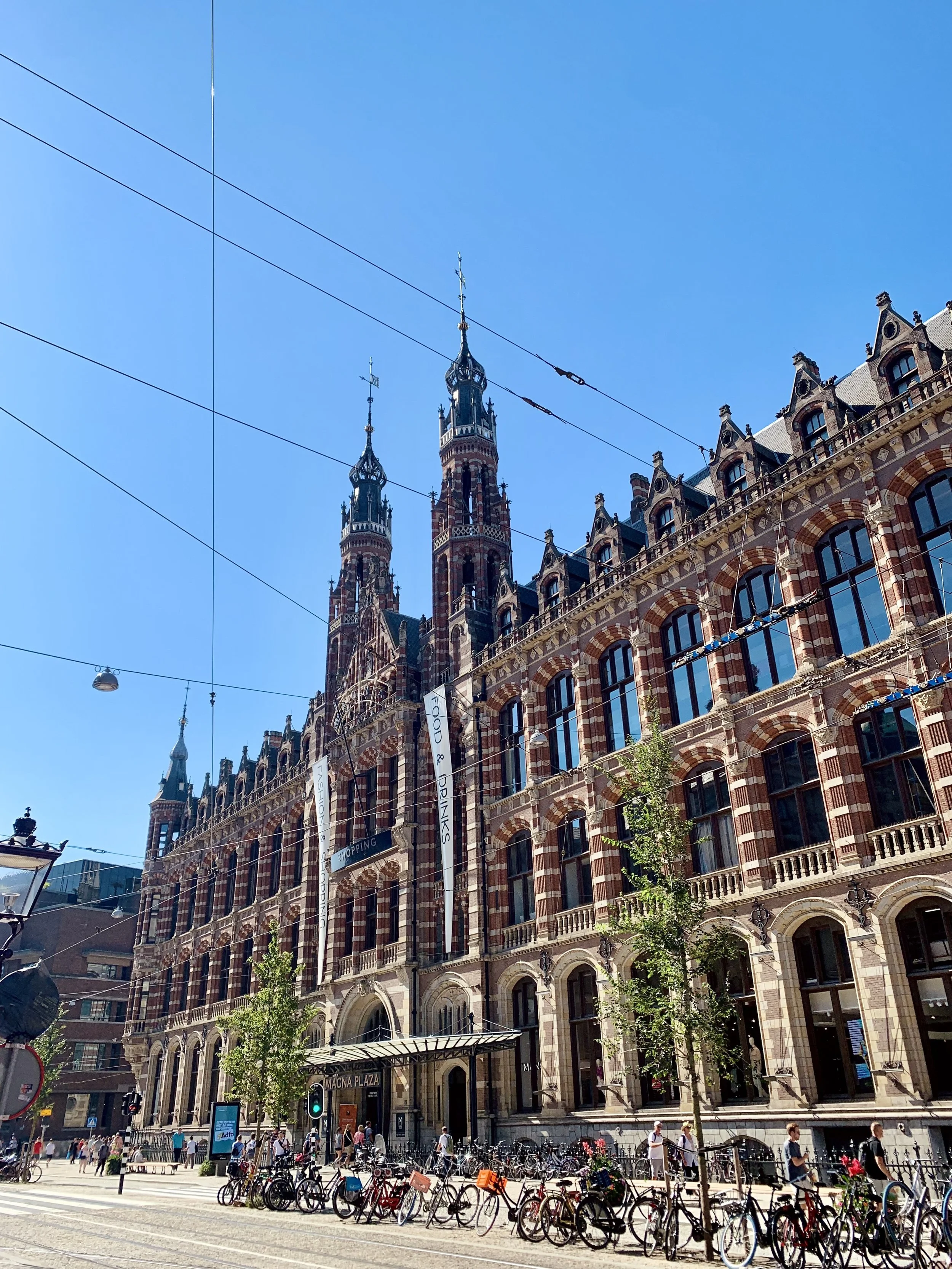
Returning to the classroom (as a student and not a teacher) after four years has proven harder than I thought. I’ve always identified as a learner, but there has been something supremely humbling about being lost in a school building amongst 19 and 20 year-olds who are returning to their tastes of adult independence and discovery. While I am figuring out the printers, they are drinking coffee by the masses in the cutest corners of campus, somehow their mini skirts and wide-legged pants never clashing with the architecture. I show up winded, sweaty, not sure where to buy coffee that isn’t a weed shop, counting the floors in the Oudemanhuispoort (“Old Man House Gate”) building as I climb the stairs to make sure I end up on the right one (Dutch count the ground floor as Floor 0). The very act of learning is a grounding experience. Every day by showing up, doing the readings, taking notes, you acknowledge that you don’t know something that you wish you did - something I’ve found the toughest of men can’t even do. :)
So while my Aussie professor discusses the pre-novel form, the very “pregnant” texts of Lukács and Bahktin in excessive and ambitious vocabulary, and the chivalric romances of medieval literature, I scribble notes and sweat and after class look up the definition of “turgid” on Google. Very un-Rory Gilmore of me. Part of me is convinced they’ve let me into the program by mistake and another part wishes to dismiss the system of higher academia as a place of bullshit critique and analysis, systemic conformity, and mainly - of privilege. And then a completely different me - the one who is a nerd for books and small details and grammar - is intrigued, impressed, engaged. Maybe it is the young adult’s job to distinguish what in these experiences are because of fear or lack of confidence and what is true to who she wants to be.
In my second class, we are discussing age in literature and the ways in which it is or isn’t represented. I mentioned to a classmate that I found a lot of books focused only on the bildungsroman - as if the only important time in a girl’s life is when she becomes an eligible woman. (Is our transition from naive girlhood to sexualized, emotive womanhood the only one that matters? Does literature show us this in whatever ways?) My classmate, however, is a stage of life ahead of me, a mother with two teenage kids. She commented that perhaps I am only reading the things that interest me, just as the books of her thirteen year-old daughter are about the innocuous dramas of middle school. Has my catalogue of background reading really been so limited? I thought of Elizabeth Strout in defense…
She also mentioned the embarrassments her thirteen year-old deals with daily, how her lunchbox, a perfectly neutral lunchbox, was recently deemed a big one. “I forgot what it’s like to be so nervous about what people think.” This sort of astounded me. I assured her that at 27 I was still nervous about talking in front of a group people. Is this the sort of confidence/bravery that comes with the next phase of adulthood? Are there parallel trajectories for maturity and confidence? Will I stop caring - or at least worrying - about how my thoughts will be received or rejected by other people? Is this something I have to do, or is it strongly suggested? This New York mom seemed to think so.
In literature (or at least the handful of texts we’ve read so far), the transformation I mainly see in aging is not one of growing confidence but of resignation. Or more positively - an acceptance of the way things are, that things are the way they are meant to be. Perhaps this is a type of confidence. When you are young, you want to be a grown up. If you were me, you want to carry a cute little purse and have a poodle named Cupcake or Hermione. You play Dress Up and House. Maybe you want to be a forensic detective or a teacher. You look so far ahead that it is not even real. As an adult, you want to be an adult who has health care, a better job with a better income, the floors swept and the gutters cleaned. Things, even if distant, are more immediate, more in front of you. As dreamy as it is to think of life without responsibility, you know you can’t go backwards. You know. Knowledge is acceptance is mooring is confidence.
- - -
Other updates include, but not limited to: Our cat, Bean Dip, is now with us in Utrecht (after an easy flight for her and an anxiety-filled one for me), she is living her best life; Kees has started setting up the print shop for the Village in preparation for Villagefest on September 30th and has now visited 2 other countries (Belgium and Germany) without me; I have obtained all my legal documents to live here long-term and opened a Dutch bank account, so am now purchasing things in the esteemed Euro; we got a rug & mirror for our living room, officially deeming it cozy; still accepting free/cheap lamps and restaurant/cafe/bar recommendations…