Identity & Place - Utrecht (Week 1)
In a novel or short story, a city becomes a character when it exudes its personality in a way that affects the plot or helps to transform the character(s). In Greta Gerwig’s Ladybird, Gerwig’s hometown of Sacramento is a focal point, and Ladybird’s dissatisfaction for the place represents the pinnacle of her self-proclaimed bildungsroman. For other film examples, I think of Tarantino’s Once Upon a Time in Hollywood or Ridley Scott’s Blade Runner. Fantasy often depends on place. (For more examples, I found a fun list on Letterboxd: “The City is a Character.”) World-building is an exhausting, necessary task. I find that we are better defined by our homes, or the places that we name home. (Go birds!) So, evaluating your relationship to a place helps to materialize your identity, and vice versa. Likewise, when you are in a strange place, far away from your home, you become estranged. People have asked if I am, as the expression goes, “living my best life.” This first week, the answer was undeniably “no.” I am a stranger to Utrecht and I am estranged from most of the things that made up my life: my cat, my family, my bed, Worrell’s Butcher Shop meatballs, Eastern Standard Time. On our third night here I cried - because I was fearful of the challenges ahead and I looked around and realized that none of my comfort items were here (excluding Kees). I feel a little better now, still scared but slightly more resilient. (The cats are plentiful and friendly here. I talked to my mom on the phone for an hour. We went to Ikea and bought our own bedding.) I wonder how Utrecht will settle into my life, what part it will play in the long run, if I will have it be a medium for transformation or simply the context of my next grander story. All this to say - I am not living my best life yet.
- - -
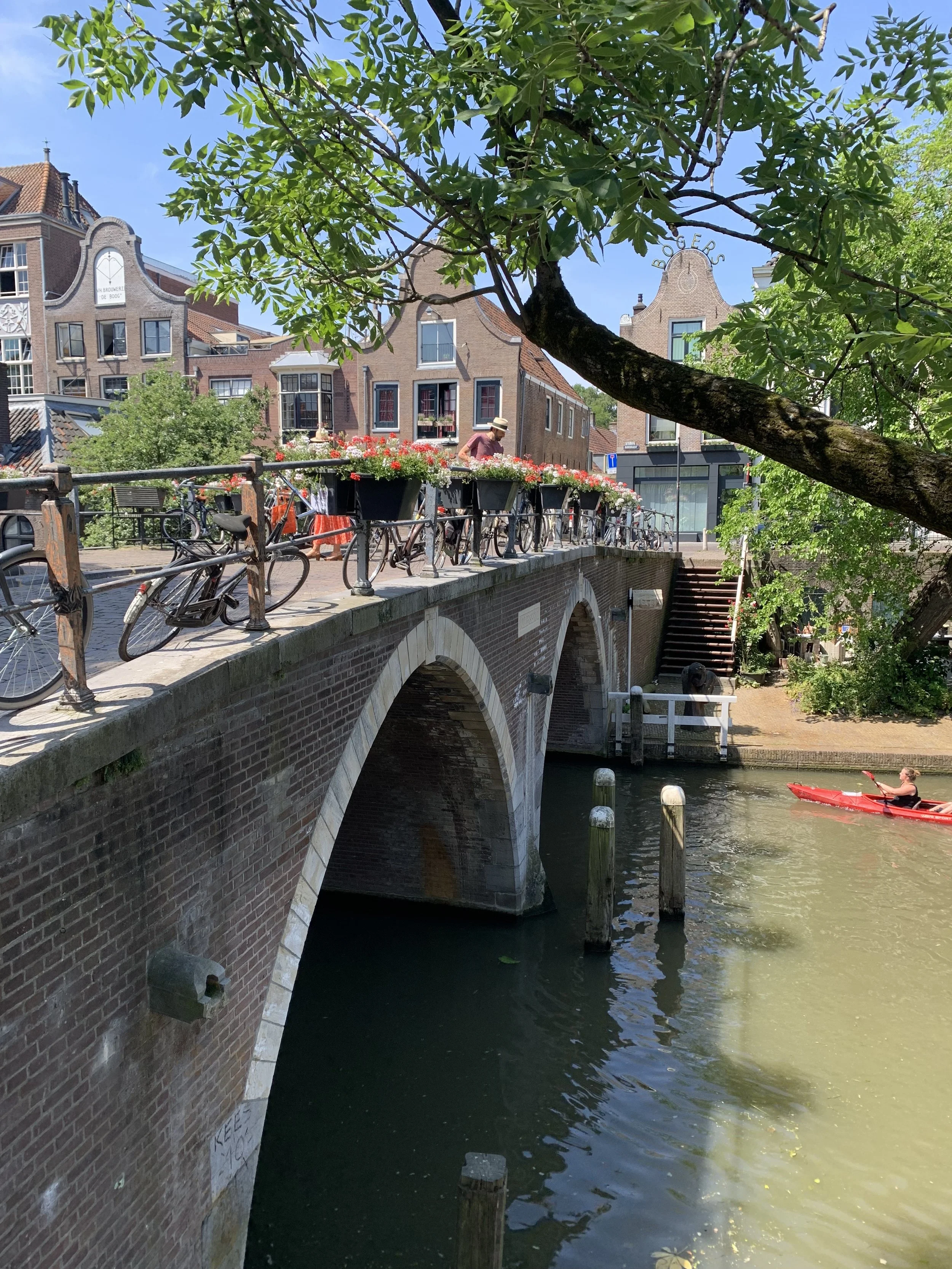
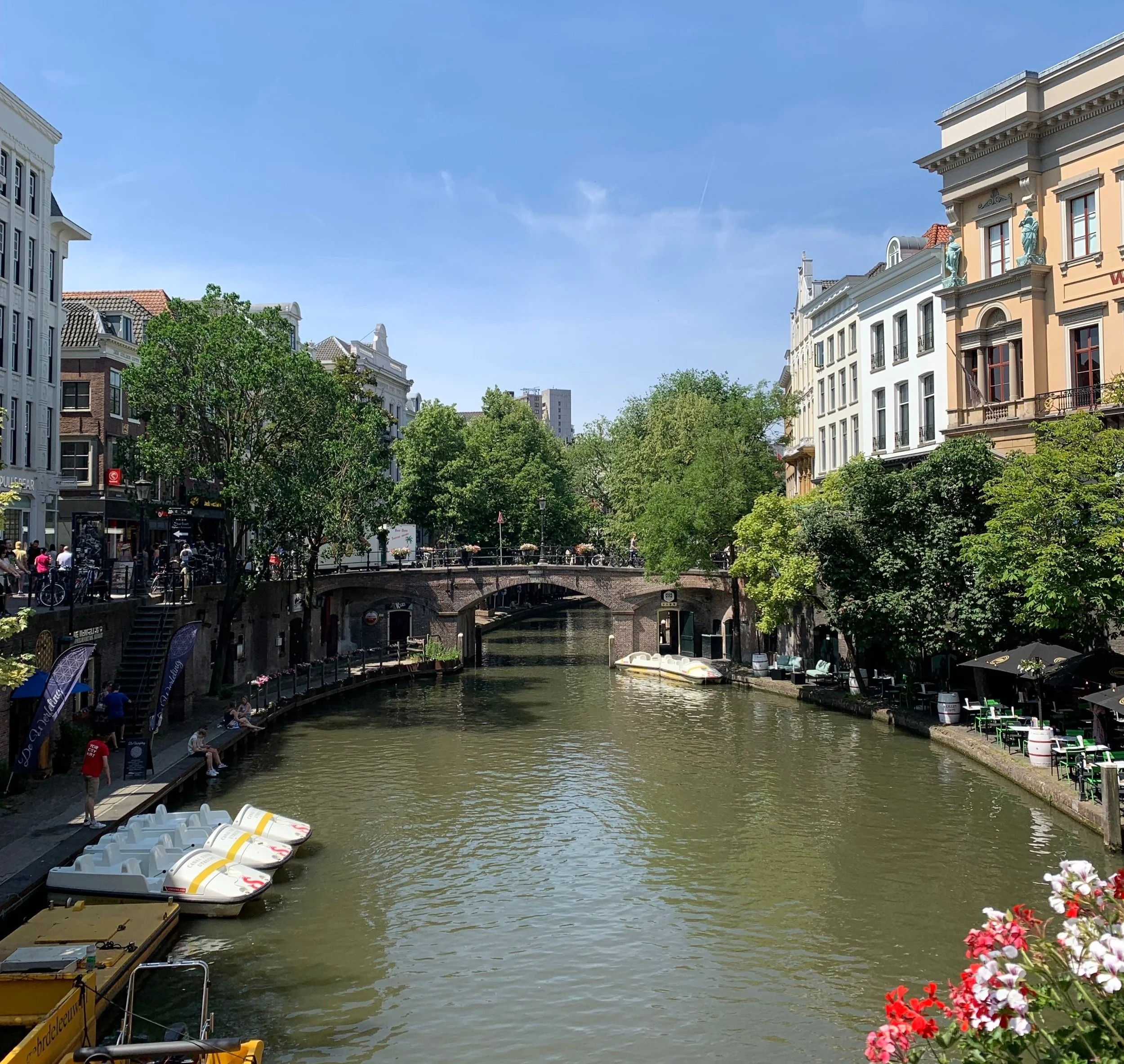
E. sits on the brick-laid sidewalk outside our Airbnb. He lives in the apartment next to our rental. Our tiny studio has a lofted bed and from it, you can see the water of the Oudegracht (“old canal”) and sometimes see a flash of body as it flings itself from the train station bridge and into the water below. The splashes are loud, not only from the moment of contact but also from the jumper’s friends who hoot at him from above. Ironically, the trains pass almost noiselessly. You can only hear them if you are carefully listening for their electric glide. Even in the unusually hot Dutch summer heat, E. sits outside for hours and plays guitar. He sings songs in English because all Dutch people below the age of 60 know English fluently. I recognize most of the songs to be American, even though E. has a lot of critical opinions on America. He is twenty-four and reeks of youthful energy - confidence that overflows, uninhibited ambition. He is easy to talk to and funny. The first day I met him he told me I looked very Dutch, which charmed me. I wonder if he meant it - aesthetically, the way I dressed and styled my hair - since it is obvious I am not European in ethnicity.
The profile of our Uber driver who picked us up at the Amsterdam airport said that he spoke English, Korean and Dutch. From the tiny circle of his photo, it seemed plausible that he could be Korean and Dutch. (This will be the combination of my future children and one I have not yet come across.) When we got into his BMW, we made the usual small talk. From the backseat, we asked if he spoke Korean. “Oh no. I don’t. I actually put that on there as a joke. Nobody has ever asked me about it. You guys are the first ones,” he responded with a laugh. Kees told him we were just wondering because I was Korean. He replied, “Yeah, I wish I could speak Korean. I mean, it’s a beautiful culture.” He went on to tell us that the joke originated from his friends, who used to call him by a Japanese name because he looked like he could be Japanese or Korean. I did not ask why he thought they could be interchangeable, how he settled on putting Korean over Japanese on his Uber profile. I didn’t ask him how it felt to be thought of as Korean or Japanese his whole life. I listened to him say vague reassurances that he loved the culture.
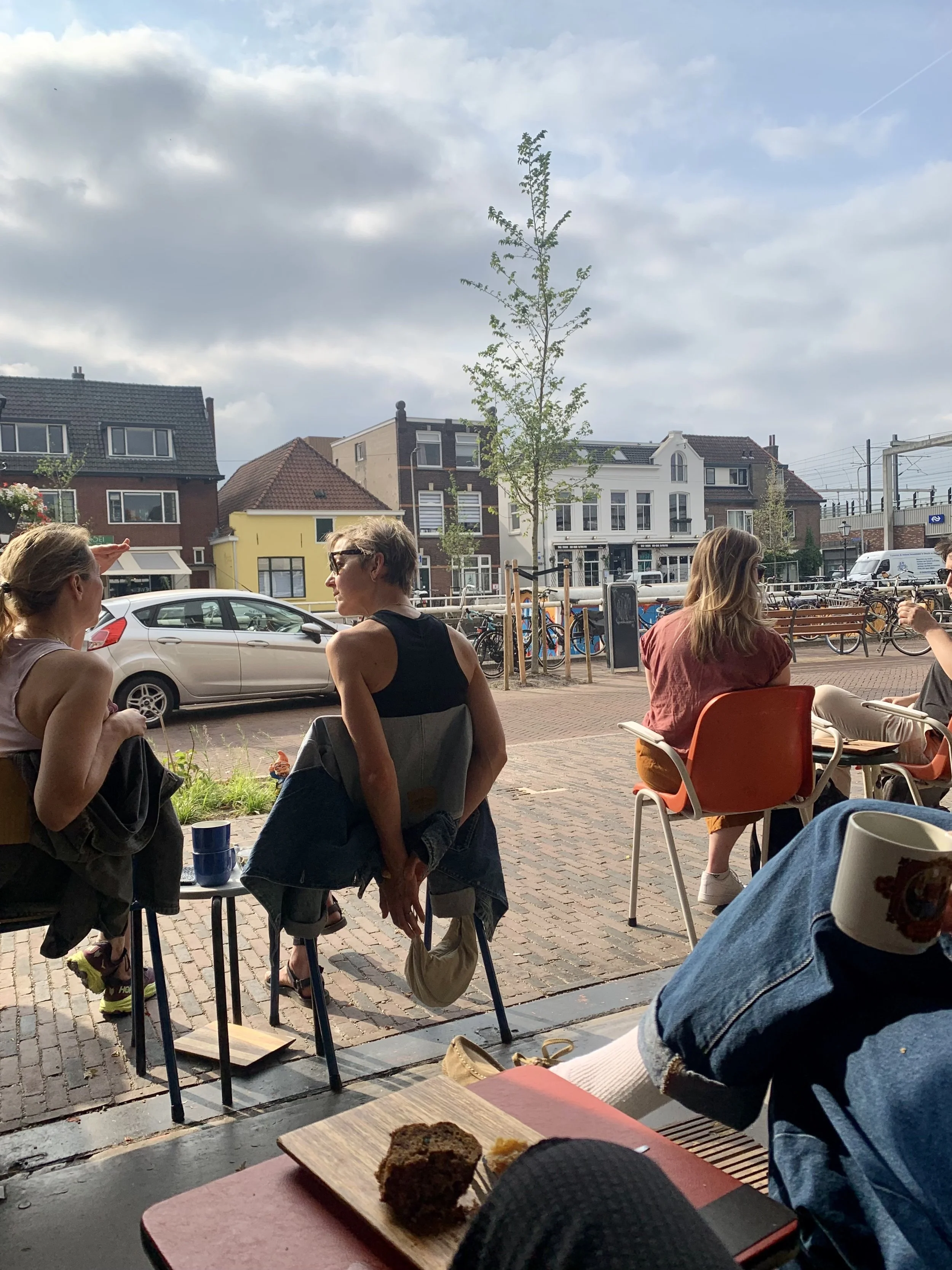
Before arriving here, I did not give much thought to being in a new, predominantly white world. I have lived in them all my life. But here, it feels that the parts of the city we occupy are even whiter than my old neighborhoods. I can count on one hand how many East Asians I have seen since arriving in Utrecht. Perhaps there were more than five, but I wasn’t always on the lookout for them. One day we took a bike ride southeast of the city center to look at a bed frame from Facebook Marketplace. The neighborhood we rode through seemed to be mostly Muslim, most likely a Moroccan or Turkish pocket of the city. Store owners sat outside smoking cigarettes and talking to neighbors. Women in hijabs pushed their toddlers in strollers, while white Dutch bicyclers, as well as Kees and I, zipped past. A majority of Dutch women are blonde, with fair skin and blue eyes. Almost all of the children we see in the city center have that milky white-blonde hair and ride in detachable seats hooked to their parents’ bicycles. The young men look very European, wear loafers without socks, skinny-legged pants and patterned collared shirts, and look the kind of “preppy” I’d be wary of in the States. Old people walk in couples down the road or roll up in an electric cart meant to replace the bicycle of their previous glory days. In contrast, the guys from the Village Coffee & Music (where Kees works) are punk rock - with lots of tattoos, in t-shirts emblazoned with a skull drinking coffee, Vans sneakers, cut-off jorts. Many of the Village women are blonde and wear all black for work. So far, I’ve met all of them from the other side of the counter - they were friendly but also busy.
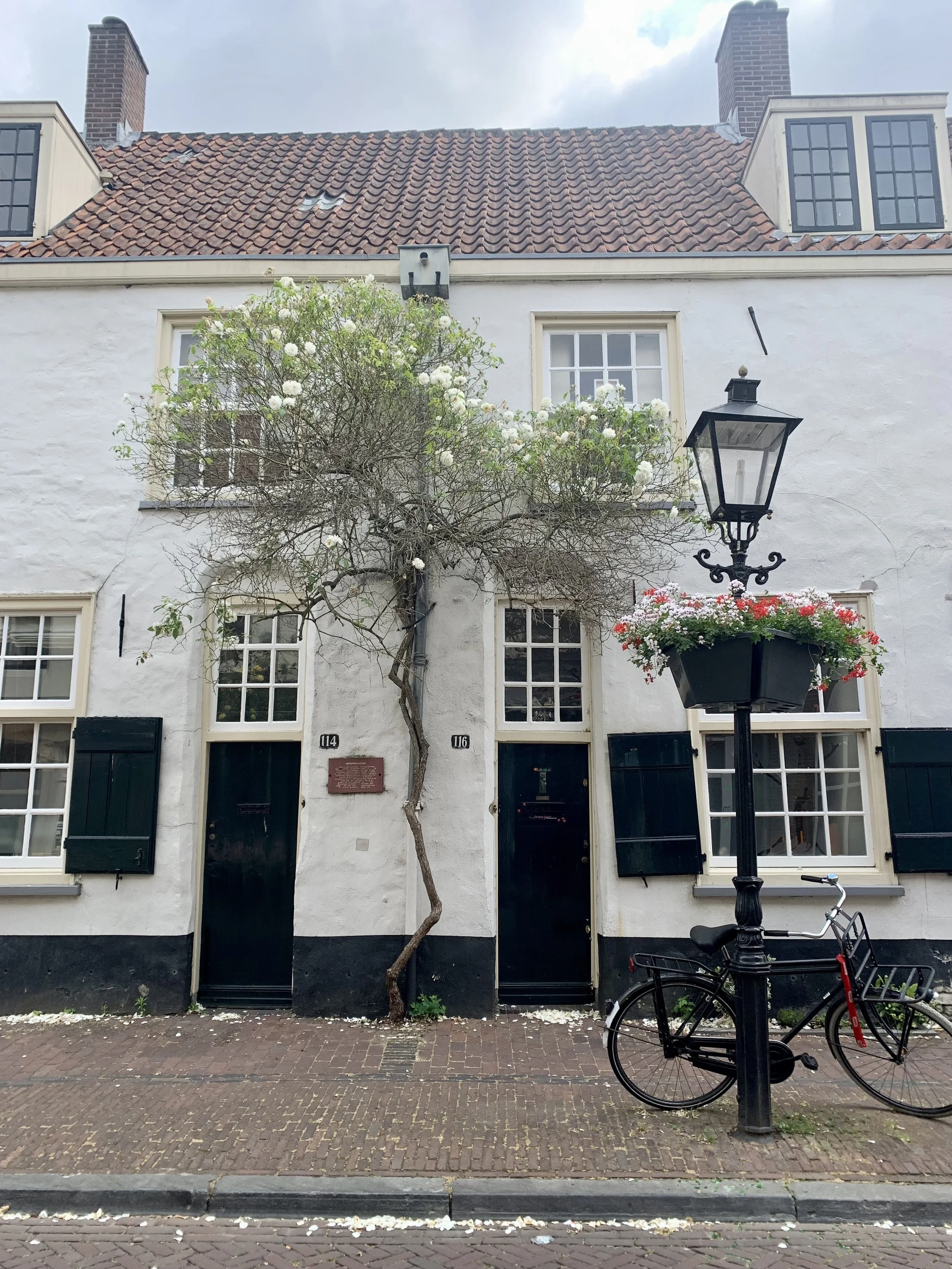
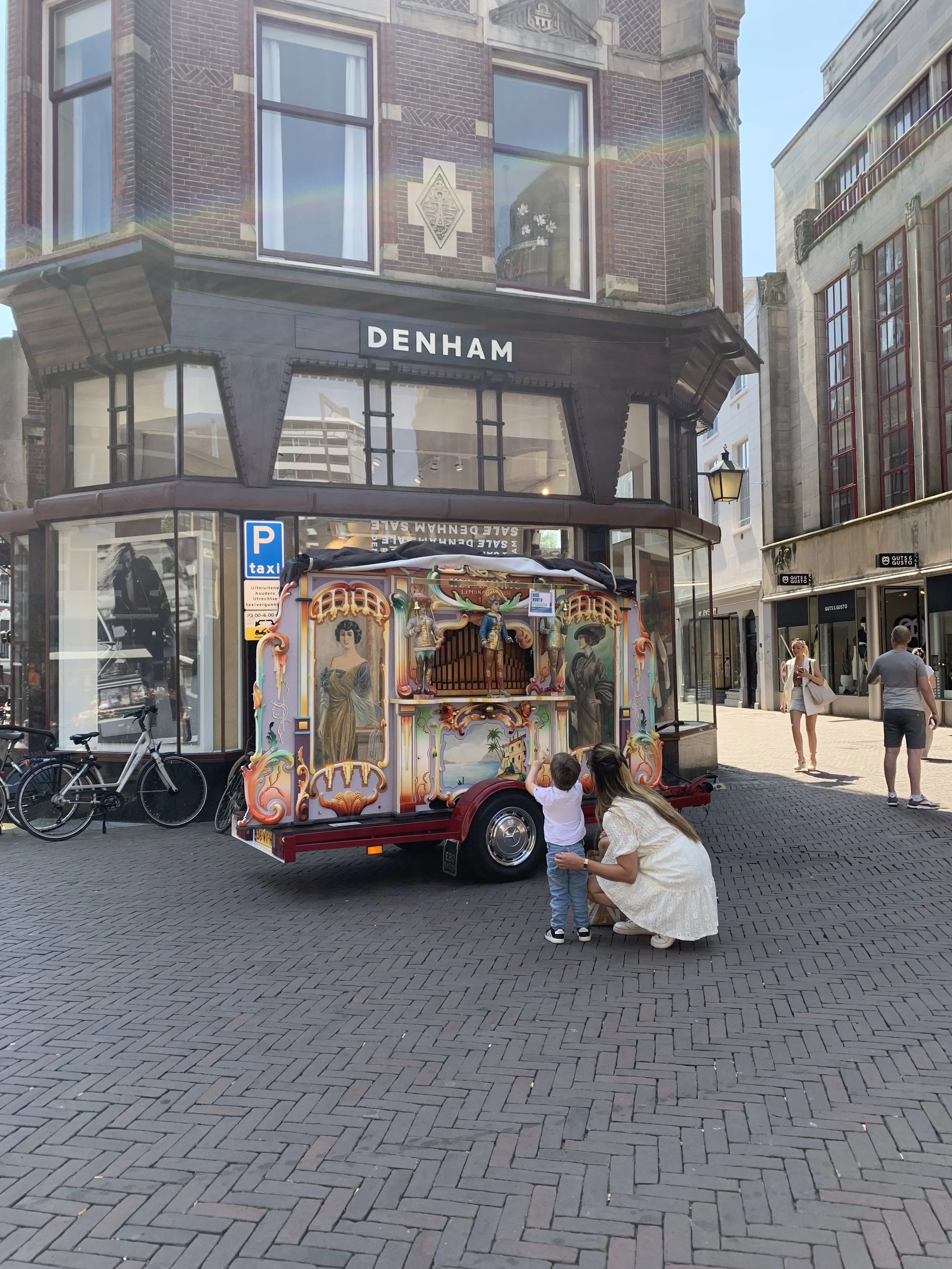
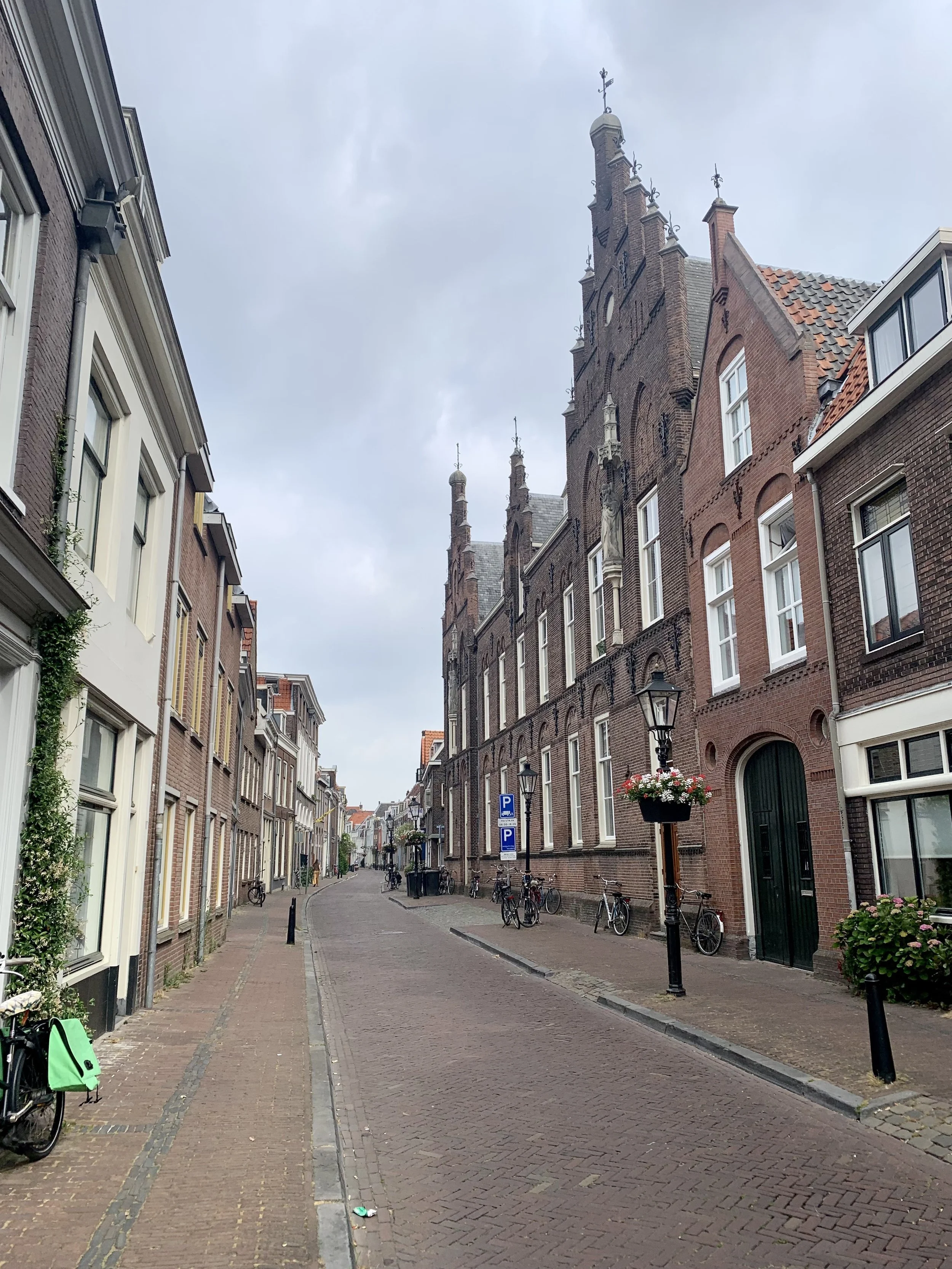
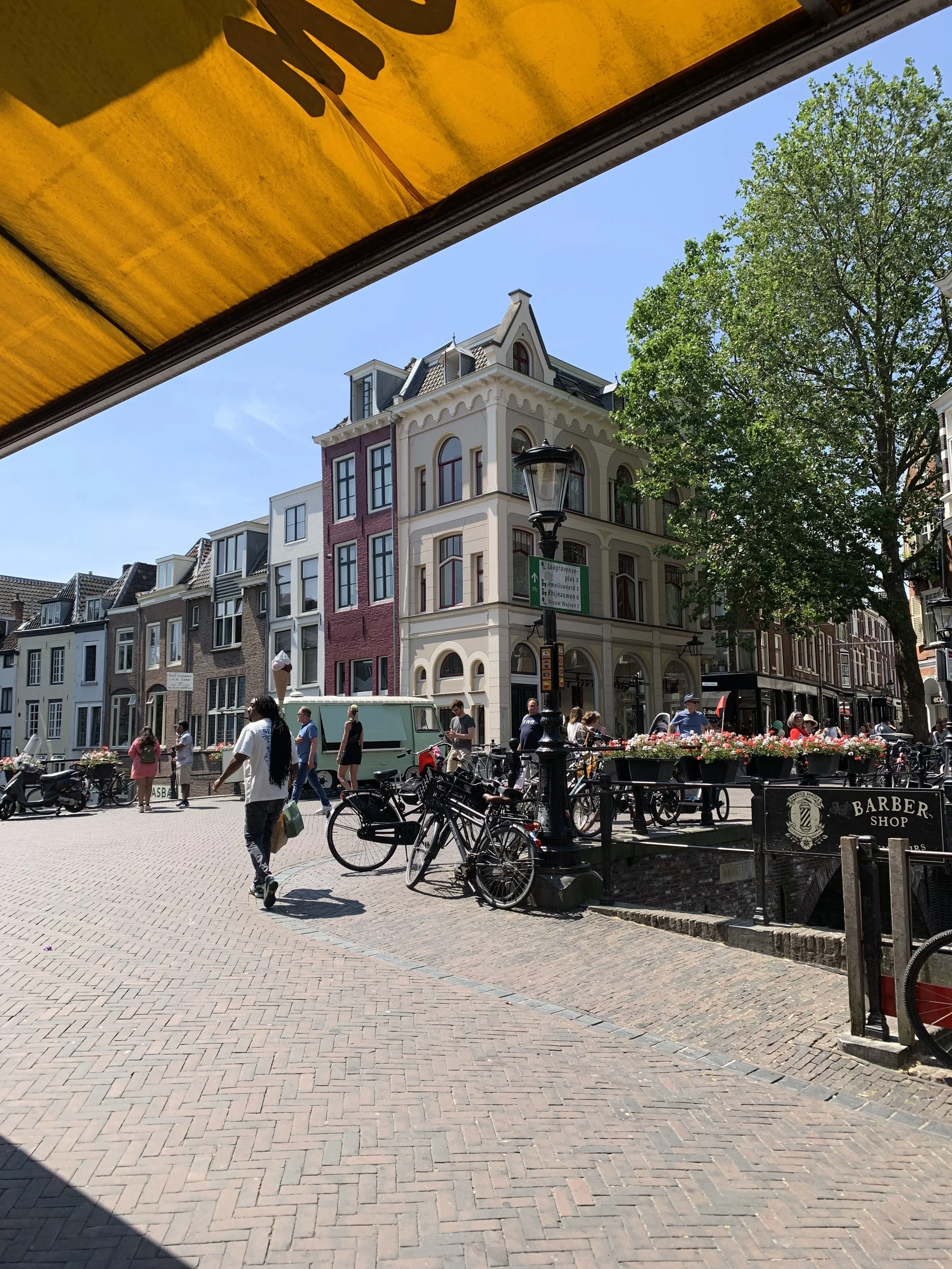
This city, with its long, late days, confident social energy, and unworried bluntness, is not yet one I can identify with. That’s not to say that I won’t ever, as I already have related to it in smaller ways - the boutiques along the Oudegracht with cute clothes and candles, the seamlessly integrated vegan and vegetarian options on menus, the man who opened his front door so his long-haired cat could join him outside. The cookies are good, the streets are quaint then contemporary. The shopping efficient and succinct. A bike makes everything easier.
- - -
The descriptions I can offer after a week are mostly superficial. This morning Kees left Utrecht to set up for a music festival with the Village guys. Tomorrow (morgen) and Tuesday (Dinsdag) I face the city for myself.