The Comfort of Language - Ewijk (Week 2)
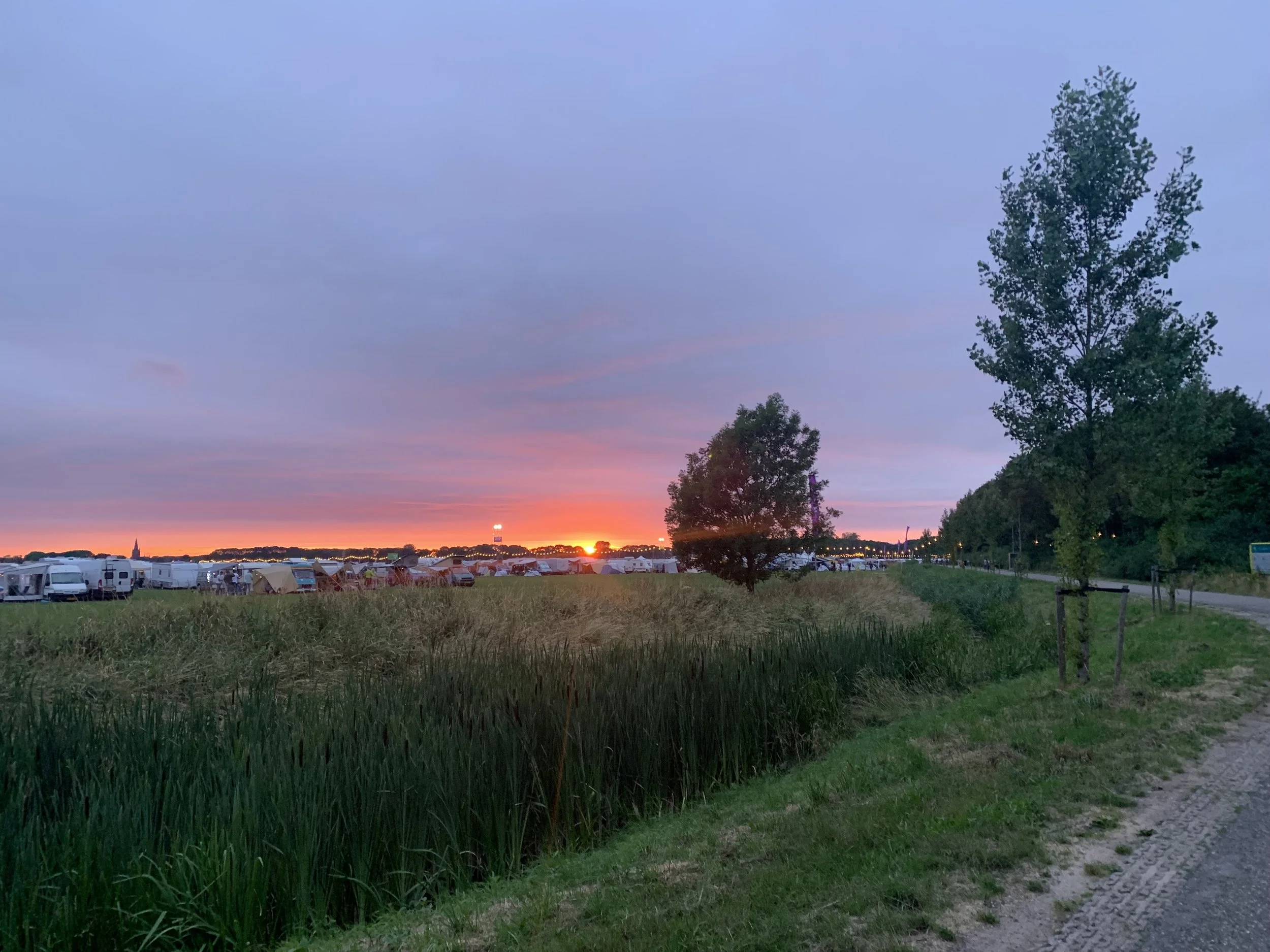
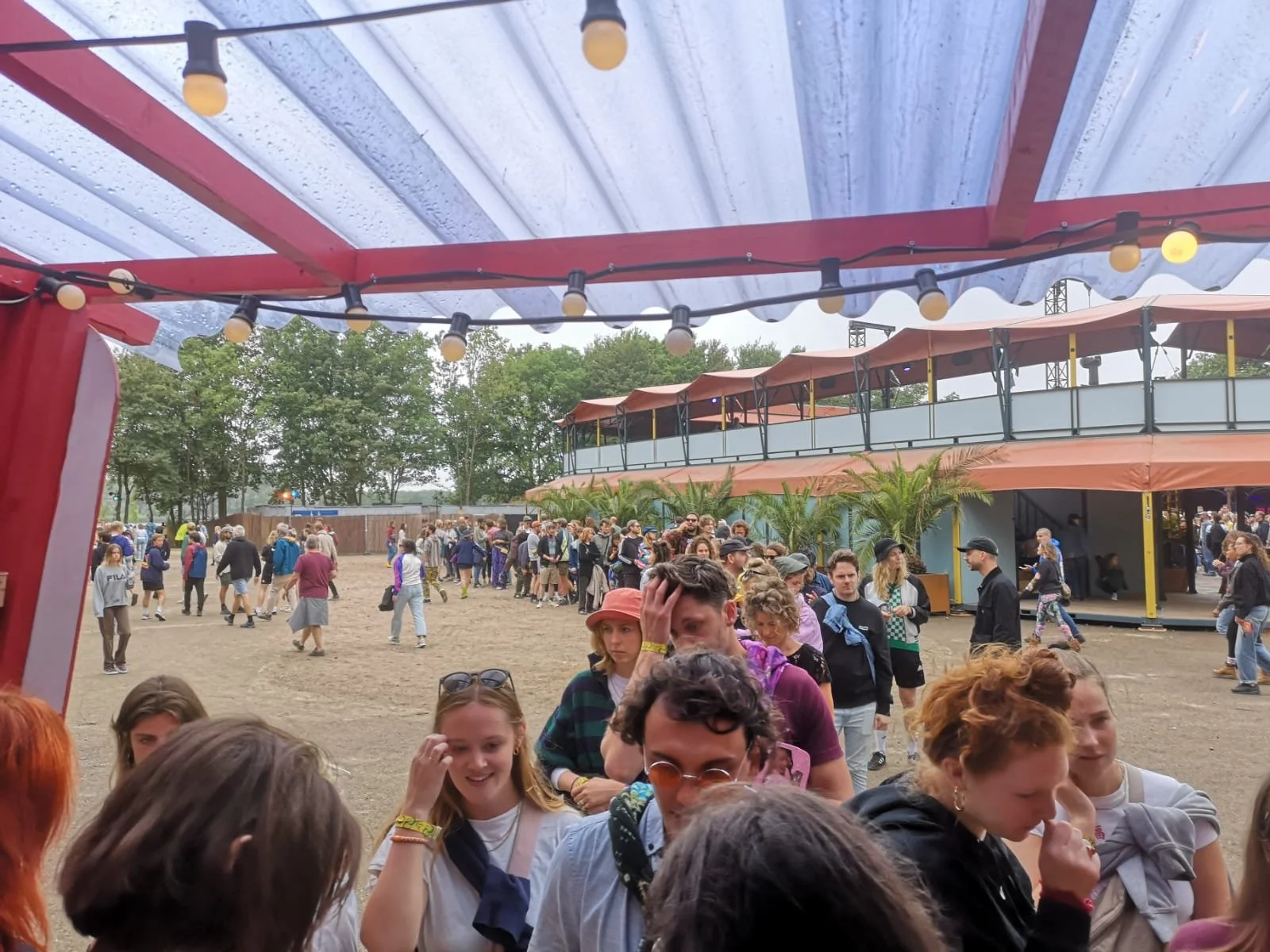
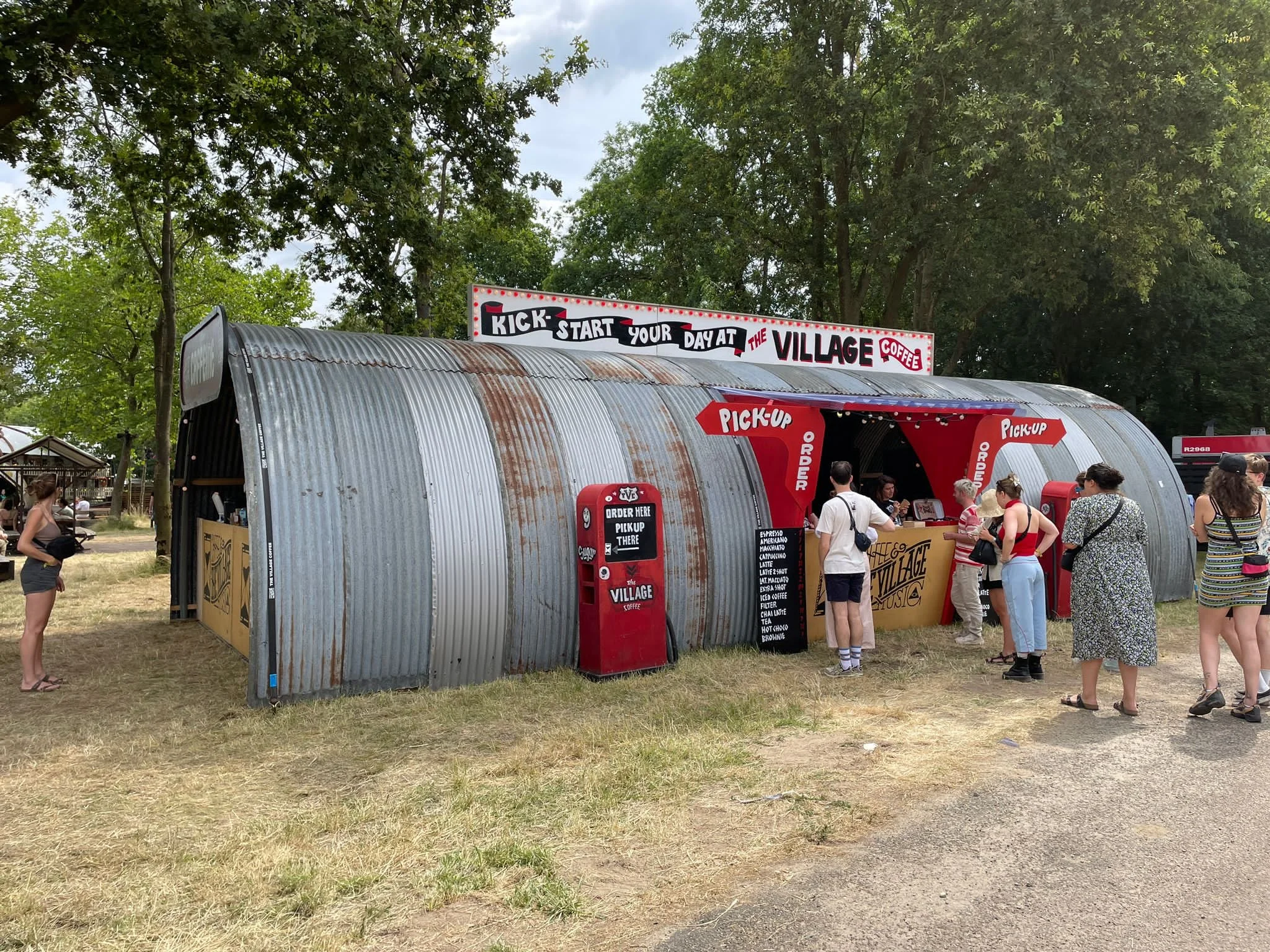
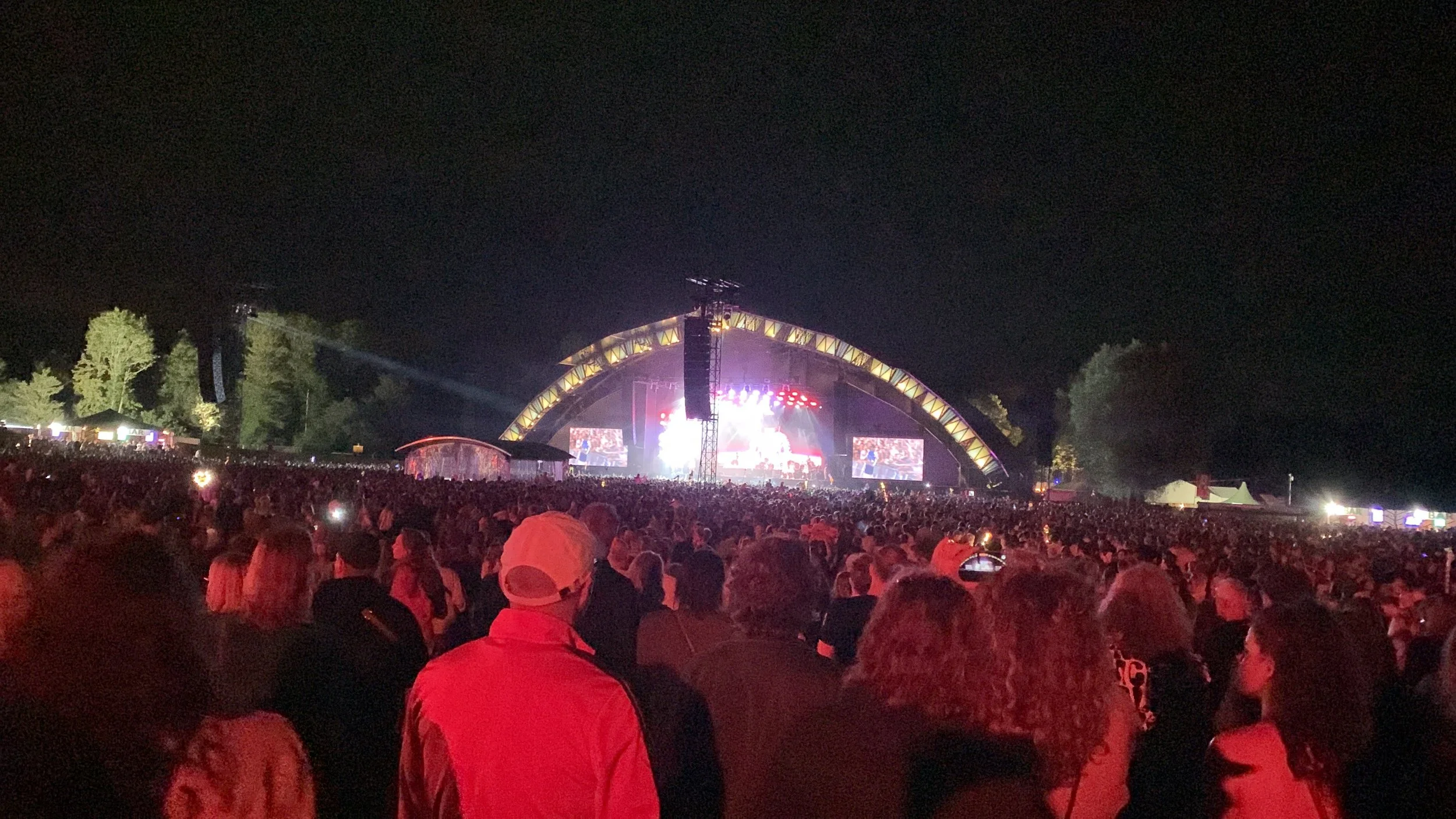
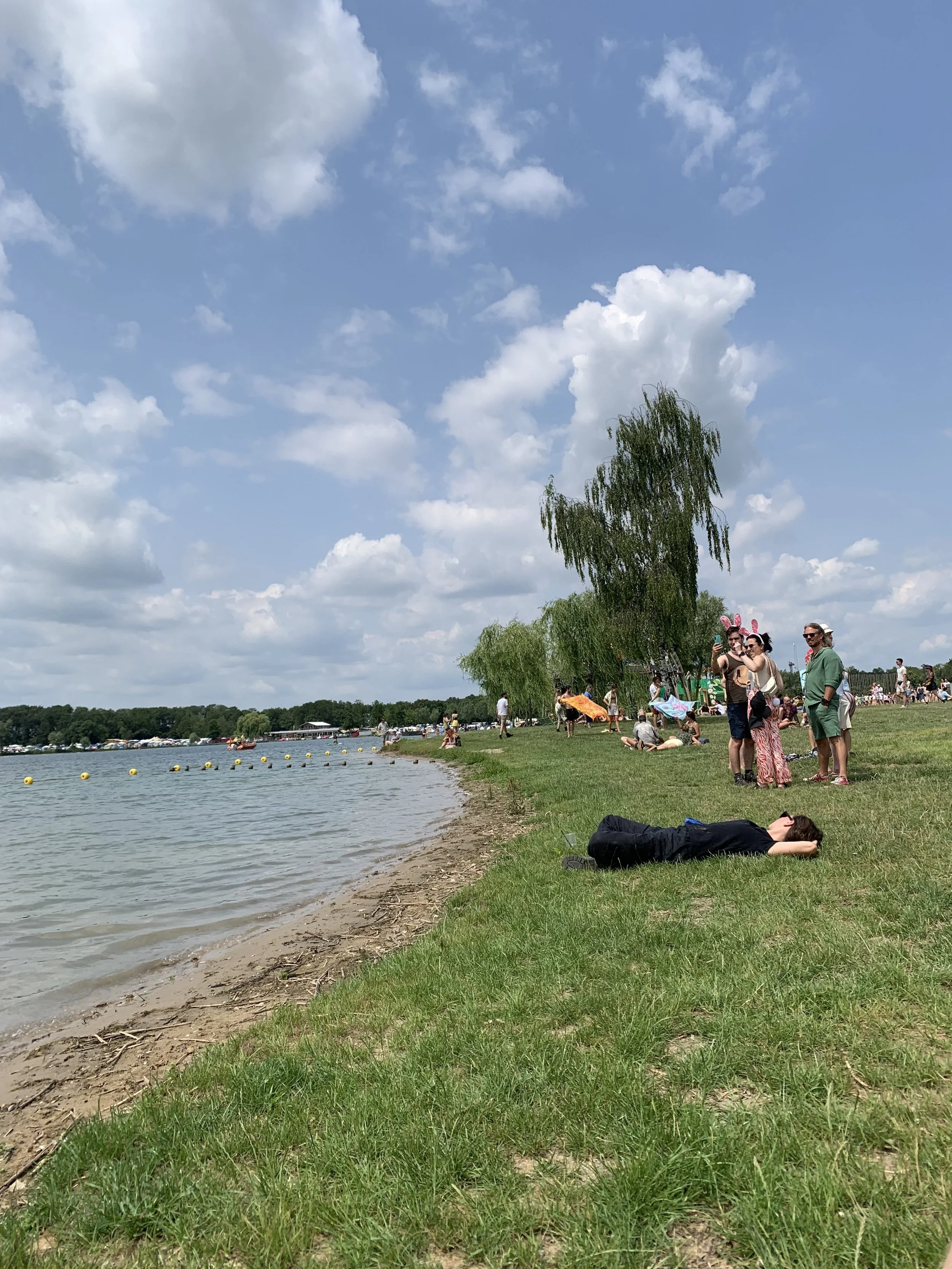
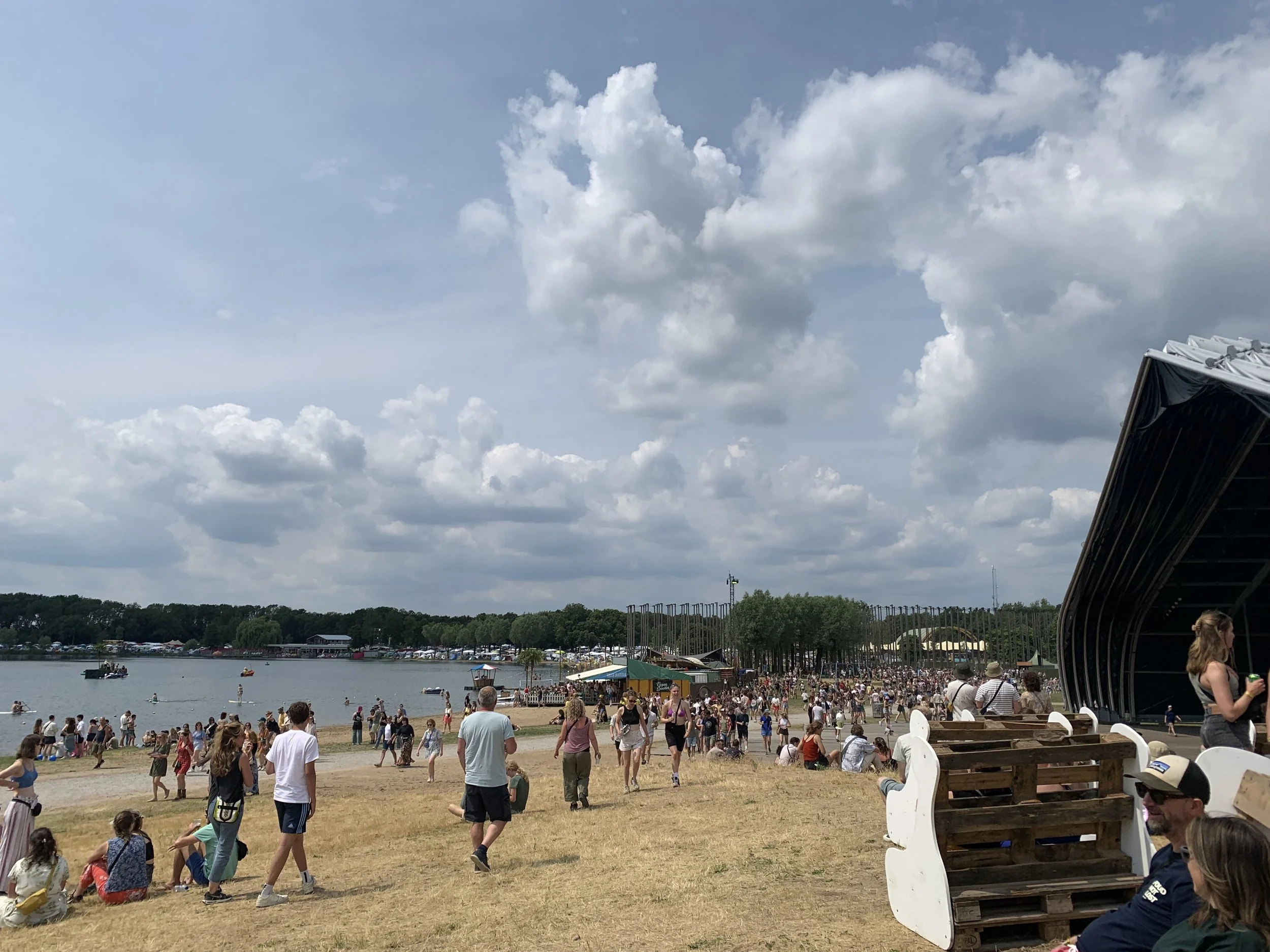
There is nothing like driving an hour into the fields of the Netherlands to work a music festival with a bunch of bands you don’t know and food stands with prices in a made-up currency (munten) and camping in a borrowed tent with a sole, thin Ikea blanket to make you miss a home you’ve only known for a week. Ewijk, a small village an hour’s drive southwest of Utrecht, has a population of about 3,500 except when it hosts the music festival Down the Rabbit Hole, during which its headcount rises by 45,000. I would estimate that I served coffee to about a third of them. There were hours (even in the rain) when the line stretched from the ordering window and across the dusty pathway to The Bizarre (a 2-story open-air venue that played the club music I have always imagined Europe to love).
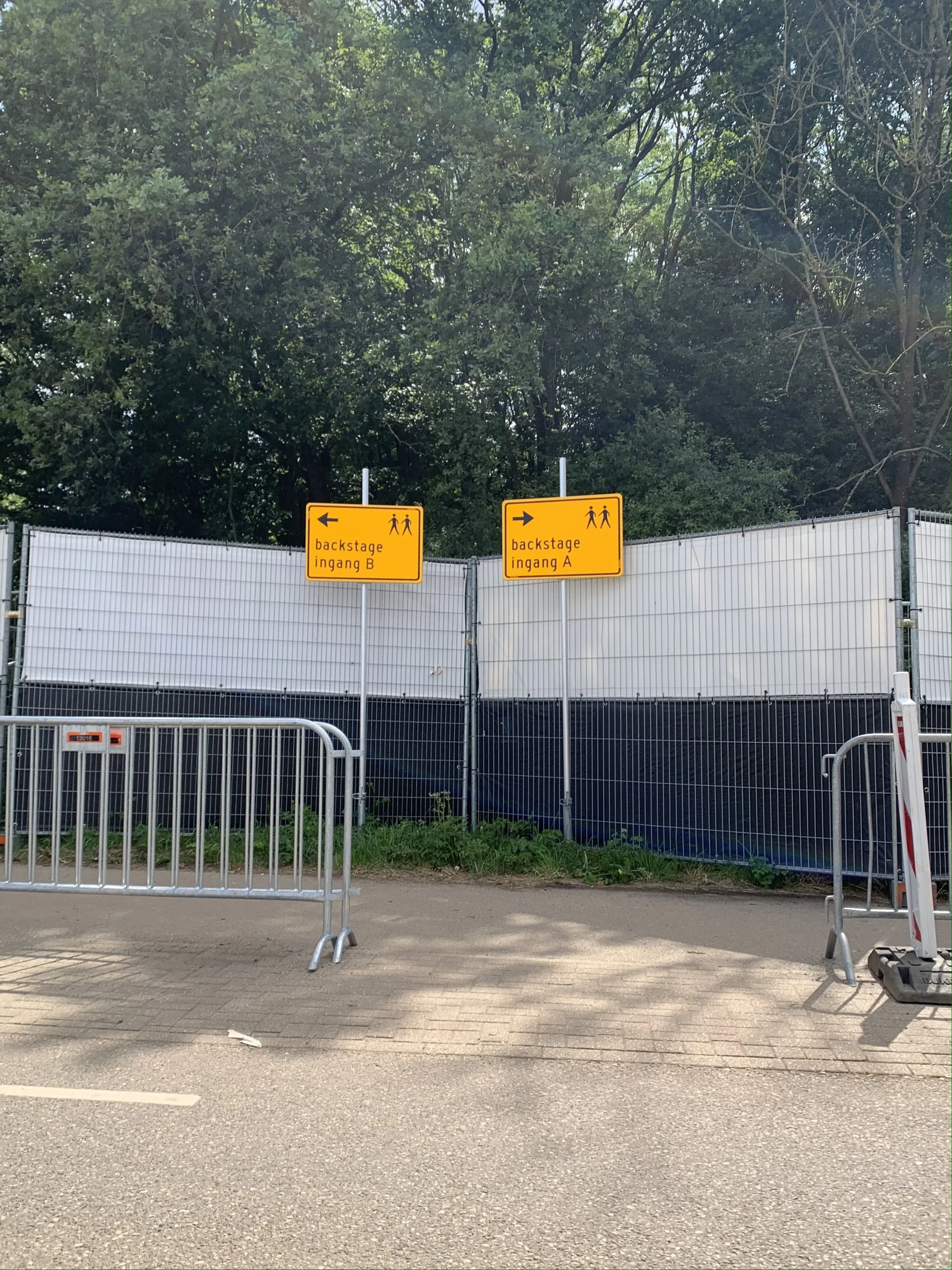
Kees and I each worked four shifts over the three-day weekend - mostly the busiest, earlier shift (10:00-15:00) and one night shift (19:00-midnight). It would be easy to fill a page with all of the Dutch names I butchered while writing them on cappuccino cups or calling them out at the side pick-up windows. (Here’s a few: Sjoerd, Gerben, Jeroen, Maaike, Gijs/Gÿs, Roos, Joop, Joost, Jelle, Thijs, etc.) Truthfully, we did not do much other than help sling coffee for The Village and sleep in our tent. We didn’t know the music. We ate a lot a brood (bread) and drank a lot of koffie (coffee). We showed our purple “crew” wristbands to a lot of security guys at gates. We walked the dirt paths to and from the crew campsite. It was really exhausting and humbling work. There is an element of being in a foreign place that, to my knowledge, has no name. In the Netherlands, they might call it the opposite of gezellig, which is the word given to a home, to feeling nostalgic or cozy in the present, the feeling of familiarity, togetherness, comfort, warmth and joy. There is no direct English translation for gezellig, which I love and makes it feel special. The opposite feeling is that of estrangement, a prominent feeling amidst my move to Europe. Being amongst a crew of people, even very kind and welcoming people, is its own kind of loneliness. There were moments working the kassa (checkout/till) when a coworker would turn to me and ask me something in Dutch, even though she knew I did not speak it. I know it was not intentional, just habitual - something so ingrained in the core of her world. I can’t and don’t expect Dutch people to always cater to my needs, even as I asked coffee customers, “Spreekt je Engels?” Do you speak English?
Twelve years ago, when I flew out of the United States for the first time, my Spanish host family insisted I speak Spanish the entire time; it is truthfully the only best way to learn. I remember drinking my very first tequila shot, licking the salt, squeezing the lime and feeling my mediocrely fluent Spanish brain slow down. I relished in the nightly phone calls home, on an international flip phone my parents paid for, and being able to speak and think in fluent English. Your native language is akin to breathing. There is nuance to every expression (humor, sarcasm, sadness, happiness, interest) that dissipates in varying degrees when you translate to a language that is not your own.
Although it is fun to pick up so many new words and phrases (listed below) and although our coworkers and customers were patient with our inaccurate pronunciations and spellings, you can’t help but feel like a toddler joining daycare for the first time. A year ago I was leading phonics lessons to elementary school students and a part of the Academic and Writing Support team in the high school, having a decent if not intellectual command of the English language, and now, here I am - seeking out children’s books for vocabulary, breaking down words by each sound, learning the different sounds of vowel pairings (& constantly forgetting them). For me, as a trained writer and a reader, it’s been difficult for me to have people not recognize my innate and creative control of language.
What’s helped? I got back to Utrecht and spent the next day eating, sleeping and reading. My current read happens to be Jhumpa Lahiri’s Interpreter of Maladies. Because I stopped buying new books before we moved, this is one of the only books I had that I still hadn’t read - swiped from my high school job. It has ended up being the perfect read - a collection of short stories revolving around first and second generation Indian immigrants now living in the Boston area. (Boston is a place of gezellig for me.) It’s about love and marriage and meeting people and the moments life changes suddenly but necessarily. It is sad, much sadder than anything I’ve experienced in my own life, but encapsulating. Lahiri’s language and the expression of the language (the ways in which she implements it) are always immaculate. They cocoon me, and it almost feels like home. Funny enough, Lahiri (a native English speaker) has learned to be fluent in Italian. Maybe there is hope for me after all. :)
& what’s helped Kees? He got back to Utrecht and is now listening to the new Uzi Vert album while doing commission work on his iPad.
Dutch words & phrases
Eet smakelijk! Enjoy your food! / Bon appetit!
Top! Sweet!
Mafkees Freak
Wat is je naam? What’s your name?
Met havermelk With oatmilk
Daar! There
Het / dit is lekker It / this is delicious
Slaap lekker Sleep well
Lekker Nice, good, cool, awesome
-je (this suffix makes everything smaller/cuter)
Broodje kaas Cheese bread (slices of cheese on a slice of bread)
Jong belegen young aged (cheese)
Hoi! Hi!
Dank je wel Thank you
Goedemorgen Good morning
Liefie Sweetie
Let op! Watch out!